


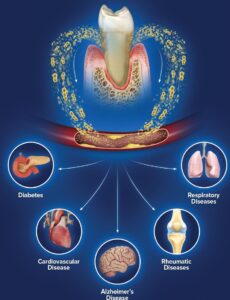
Today, doctors and dentists agree on one thing: your mouth health is strongly linked to your overall health. In other words, the problems that start in your gums or teeth don’t always stay there. They can signal – or even influence – health issues elsewhere in the body.
Read on to learn four of the most important connections that affect us every day.
1. Gum Disease & Heart Disease: A Link You Shouldn’t Ignore
Gum disease (also called periodontal disease) is far more common than most people realize. In its early stages, the only signs may be bleeding gums or bad breath. But when gum disease becomes more advanced, it can cause chronic inflammation and bone loss.
That inflammation is what concerns heart doctors.
Research shows that:
- People with moderate to severe gum disease have a higher risk of heart disease.
- Inflammation in the gums may contribute to inflammation in the blood vessels.
- Bacteria from infected gums can enter the bloodstream and travel to the heart.
While gum disease doesn’t cause heart disease outright, it can definitely make it worse – and the two conditions often go hand in hand.
What you should know:
If your gums bleed when you brush or floss, don’t ignore it. It’s one of the earliest signs of a condition that doesn’t just affect your mouth – it may affect your heart health, too.
2. Diabetes and Oral Issues: A Two-Way Relationship
Diabetes and dental health affect each other more than many people realize. High blood sugar levels can make the mouth more vulnerable to infection, which means:
- Gum disease develops more easily
- The mouth dries out, causing cavities and mouth sores
- Healing takes longer after dental work
But the relationship goes both ways. People with untreated gum disease often find it harder to keep their blood sugar stable. The inflammation from gum infections can make the body more resistant to insulin.
What does this mean for patients:
Good dental care doesn’t just protect your teeth – it can help make diabetes easier to manage. For diabetics in particular, regular cleanings and gum checks are essential, not optional.
3. Bad Breath & Digestive Conditions: When the Problem Isn’t in Your Mouth
Almost everyone deals with bad breath from time to time. But persistent bad breath may not be caused by poor brushing – it can be a sign of digestive issues.
Some digestive conditions linked to bad breath include:
- Acid reflux (GERD)
- Helicobacter pylori infections
- Slow digestion or chronic indigestion
- Dry mouth
GERD, for example, allows stomach acid to travel upward, leaving a sour or metallic odor. Infections like H. pylori can also produce strong, persistent bad breath.
How to tell the difference:
If bad breath doesn’t improve with brushing, flossing, mouthwash, or dental cleaning, it may be coming from the stomach or digestive tract rather than the teeth. In that case, a medical checkup is the next step.
4. Sleep Apnea: Signs Your Dentist Can Spot First
Many people think of sleep apnea as a nighttime breathing disorder – but it often leaves clues inside the mouth.
Dentists may notice:
- A scalloped tongue (impressions along the edges from the tongue pressing against the teeth)
- Redness or dryness of the mouth from mouth breathing
- Worn-down teeth caused by nighttime grinding, a common sign of disrupted sleep
- Crowded throat anatomy, small airway, or large tongue
Because dentists often see these patterns before patients realize they have a sleep issue, many cases of sleep apnea are first detected in the dental chair.
Why this matters:
Untreated sleep apnea can lead to high blood pressure, fatigue, heart strain, and increased risk of car accidents. Recognizing the oral signs can lead to life-changing early diagnosis.
What you can do to prevent gum disease:
- Brush and floss daily
- Visit a dentist twice a year for cleanings
- Pay attention to new symptoms like bleeding gums, chronic dry mouth, or unexplained bad breath
- Talk to both your dentist and doctor when symptoms overlap
By understanding the mouth–body connection, we can take simple steps that protect not only our smiles, but our overall health.